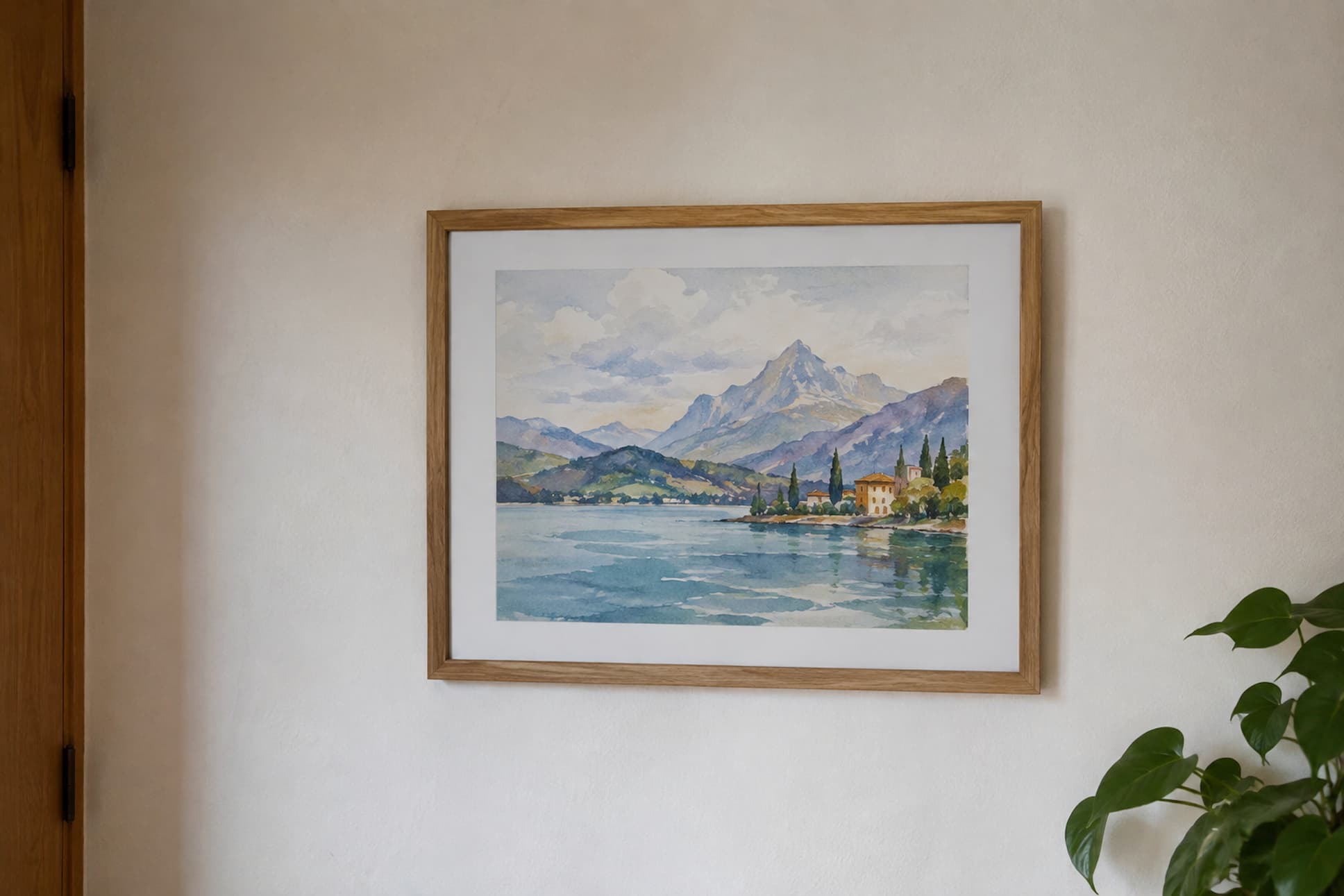
Do you like a piece of artwork but aren’t sure whether an original or a print is the right choice for you? At first glance, they may look very similar, yet they are very different purchases when it comes to price, value and overall experience. Here, we break down the differences so you can make an informed decision.
Both show the same image, but they are not the same thing. It’s worth understanding the difference before comparing prices or results.
An original is the artwork the artist has created directly on the chosen surface, in this case, watercolor paper. It is one of a kind: not even the artist could paint exactly the same wash twice.
You can see this when viewing it up close. The transparency, texture of the paper, variations in pigment intensity and traces of the creative process are all part of the piece.
An art print is a printed reproduction of an original artwork. It can range from an industrially produced poster to a fine art print, and the difference in quality between the two can be enormous.
Higher-quality prints are produced using giclée printing technology, which uses pigment-based inks on archival paper. They are often released as limited editions, meaning there is a maximum number of copies, and they may be signed and numbered by the artist.
When they also come with a certificate of authenticity, the print becomes a traceable art edition. This is very different from a decorative poster with no clear provenance.
A poster is usually a mass-produced print on standard paper, while a fine art print focuses on color accuracy and durability, and a printed canvas transfers the image onto fabric with the appearance of a painting. All three are reproductions, and none is an original artwork, which is important to keep in mind when comparing prices.
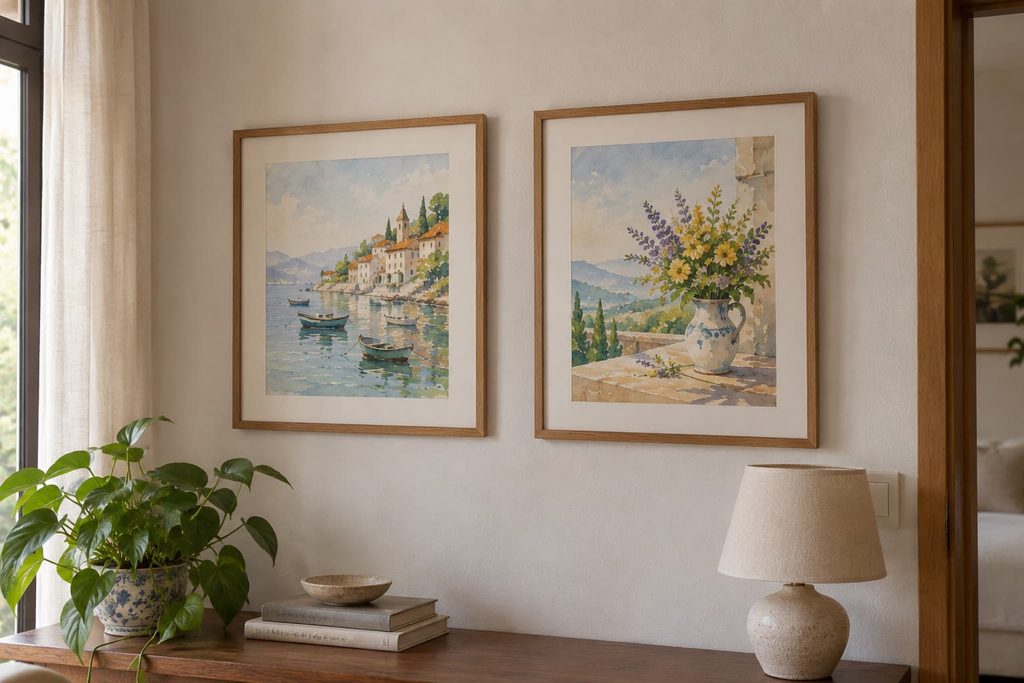
Beyond the image itself, there are four key differences that can influence your purchasing decision. Let’s look at them one by one.
An original is unique, and that exclusivity is what underpins its artistic and market value. When you buy an original, no one else will own that exact same piece.
A print, on the other hand, exists in multiple copies, even when it is part of a limited edition. That doesn’t make it lesser art, but its value is different: you are buying it for the image and your personal appreciation of it, rather than for its rarity.
An original requires a greater investment because it reflects the artist’s time, materials and the uniqueness of the piece. A print allows you to bring home the same composition for a fraction of the cost, which is why it is often the most accessible entry point into collecting art.
With watercolor, much of its appeal lies in what a screen or print cannot fully capture: the transparency of the pigment, the texture of cotton paper and the subtle variations created by layers of washes. A well-made giclée print can come very close to the original colors, but it cannot reproduce the physical material itself.
The difference is especially noticeable up close and under side lighting. At a normal viewing distance, hanging on a living room wall, a high-quality print can be very convincing.
That’s why it’s worth seeing the original in person, if possible, before deciding how important that texture is to you. If that’s not possible, ask for detailed photographs and compare them with the print.
Here’s a detail that may come as a surprise: an original watercolor is more delicate than many prints because its pigments can fade when exposed to light and the paper reacts to humidity. It requires conservation framing, with an acid-free mount and UV-filtering glass, and it should not be hung in direct sunlight.
A well-produced print also requires care, but depending on the inks and paper used, it will generally withstand everyday decorative use better. In addition, if it is damaged one day, it can be replaced, which is not the case with an original.
An original makes more sense when you’re looking for more than just a beautiful image. These are some situations in which it can be worthwhile:
If you’re buying with the expectation that the artwork will increase in value, be cautious: the art market is unpredictable, and no artwork guarantees a price increase. It’s more sensible to buy something that genuinely moves you and treat any potential increase in value as an added benefit.
A print is just as valid a choice as an original and, in many cases, more practical. It makes particular sense in these situations:
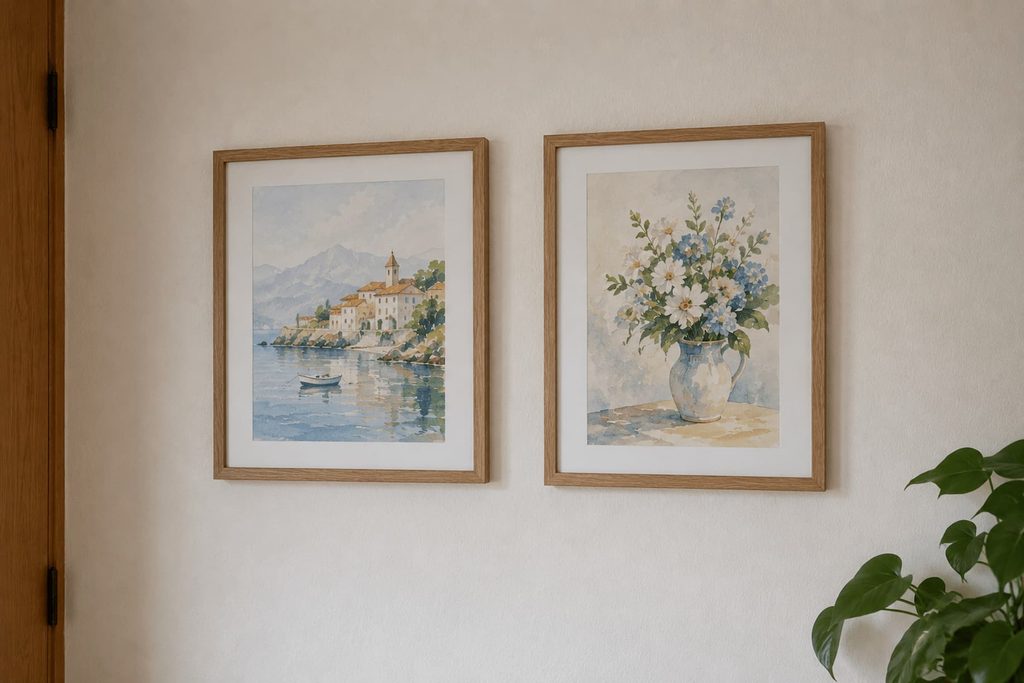
Not all prints are worth the same, and the price doesn’t always reflect the quality. Before buying, look for these points:
If the seller cannot answer questions about the paper, inks or print run, that’s a warning sign. A reputable print should always come with clear information about how it was produced.
A limited-edition print can retain its value if the artist has an established career and the edition is small, but it generally does not appreciate in value in the same way as an original. Its resale value is usually considerably lower than that of the original artwork from which it was produced.
That’s why it’s better to buy a print for what it means to you rather than as an investment. With that mindset, the purchase can still be satisfying even if you never sell it.
Start by measuring your wall. A large original needs some breathing room around it, while a small print can get lost on a large wall, so getting the size right is just as important as deciding between an original and a reproduction.
Next, set a budget you’re comfortable with. Buying art should bring you joy, not financial stress: if an original would put too much pressure on your finances, a high-quality print can fulfill its decorative and emotional purpose without that burden.
Finally, ask yourself what you’re really looking for: an exclusive piece or an image you want to live with every day. If it’s the latter, a well-made print can do the job perfectly. And if, over time, you still find yourself thinking about the original, you’ll know that it’s the right choice for you.