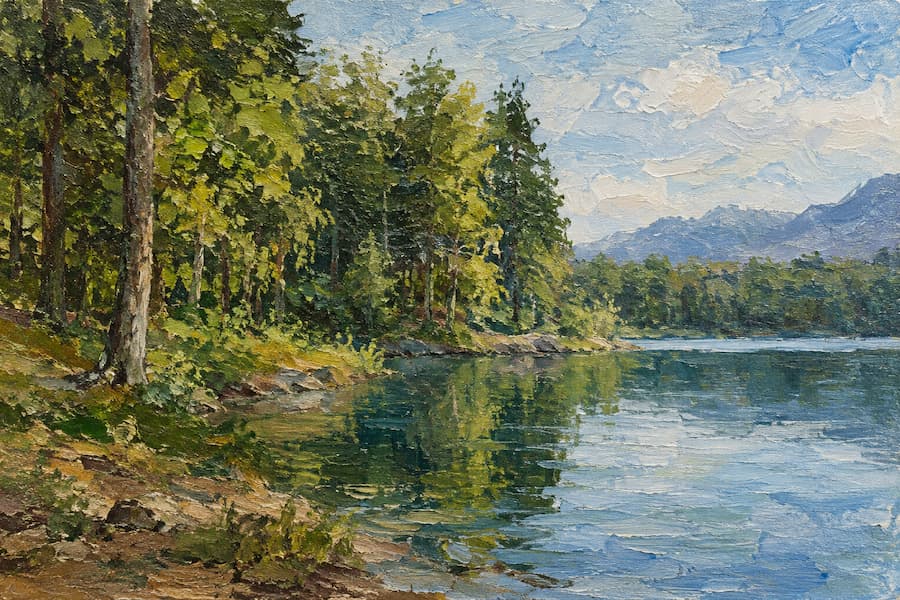
Have you ever wondered why an oil painting seems to have a light of its own? The answer lies in the surface, the layers, and the time the artist devotes to each passage. Keep reading to discover why every painting created using this technique is truly a one-of-a-kind work of art.
Oil painting on canvas is a technique in which pigment is mixed with a drying oil, usually linseed oil, and applied to fabric stretched over a wooden frame. This combination of oil paint and a textile support has shaped much of the history of Western painting since the 15th century.
What makes each painting a unique work of art is the handmade process. Every color is mixed by hand on the palette, each brushstroke reflects the moment in which it is applied, and the layers overlap according to a logic that is impossible to reproduce exactly. That is why an original oil painting is fundamentally different from a printed reproduction.
Before the first stroke of color appears, preparatory work determines how long the artwork will last. In canvas painting, the support is just as important as the paint itself.
The two most common fabrics used for an oil painting canvas are linen and cotton. Each contributes different qualities to the final result:
The canvas is stapled or nailed to a wooden stretcher frame and stretched until it is firm and free of wrinkles. Proper tension prevents the surface from becoming loose as temperature and humidity change. Many stretcher frames also include wooden wedges that allow the tension to be adjusted over time.
Primer, also known as gesso, is the white coating applied to the fabric before painting. It seals the fibers, creates an even surface, and prevents the oil in the paint from eventually damaging the canvas.
Without this preparation, the oil would deteriorate the fibers over time. That is why high-quality canvases come pre-primed, although many artists prefer to prepare their own surfaces to control absorbency and the background color.
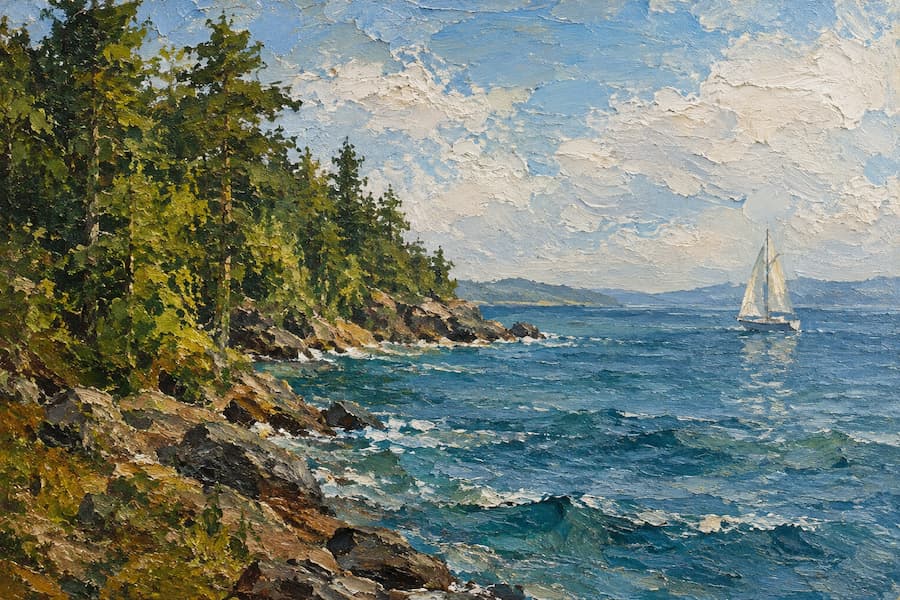
An oil painting is not completed in a single session. It is built in stages, starting with a sketch and initial blocks of color that establish the composition and the balance between light and shadow.
Additional layers are gradually added to create volume, tonal variations, and detail. Each layer must wait for the previous one to dry sufficiently, and this slow pace is part of what gives the artwork its depth.
Painters follow a traditional studio principle known as fat over lean: each new layer contains slightly more oil than the one beneath it. This allows the upper layers to remain flexible over the lower ones, reducing the risk of the paint film cracking over the years.
Oil paint allows artists to explore both transparency and texture within the same artwork. These are some of the most recognizable techniques:
Unlike other types of paint, oil paint does not dry through evaporation but through oxidation. A thin layer may be touch-dry within a few days, while a thick layer can take months to cure completely.
This slow drying process is an advantage for artists, who can make corrections, blend colors, and return to the painting over several days. It also explains why a newly completed painting needs time before it can be varnished.
Although all three mediums can be applied to fabric, they behave very differently. Acrylic paint dries within minutes and can be diluted with water while still wet, whereas oil paint offers a longer working time and greater optical depth.
Watercolor, on the other hand, is the most delicate of the three mediums. It is transparent, relies on water, and does not easily forgive mistakes, so using it on canvas requires special preparation.
If you are just starting out, acrylic is more forgiving because of its fast drying time, while oil paint rewards those who enjoy a slower process. Watercolor on canvas is an option for artists seeking a fluid effect in a format other than paper.
Painting watercolor on canvas may seem contradictory because conventionally primed fabric repels water and prevents the pigment from settling properly. Nevertheless, there are solutions that make it possible to achieve watercolor’s fluid appearance while retaining the presence of a painting on canvas.
To paint with watercolor on fabric, artists use a specialized absorbent primer that creates a textured surface capable of holding water and pigment. There are also watercolor-ready canvases that come pre-treated and can be painted on directly.
The results are not identical to those achieved on paper. Pigment lifts more easily, and glazing requires a steady hand, so it is advisable to experiment before starting the final artwork.
Once completed, a watercolor painting on canvas needs protection because the pigment remains sensitive to water and light. Depending on the effect the artist wants to preserve, the painting can be sealed with a varnish or fixative compatible with watercolor, or framed behind glass.
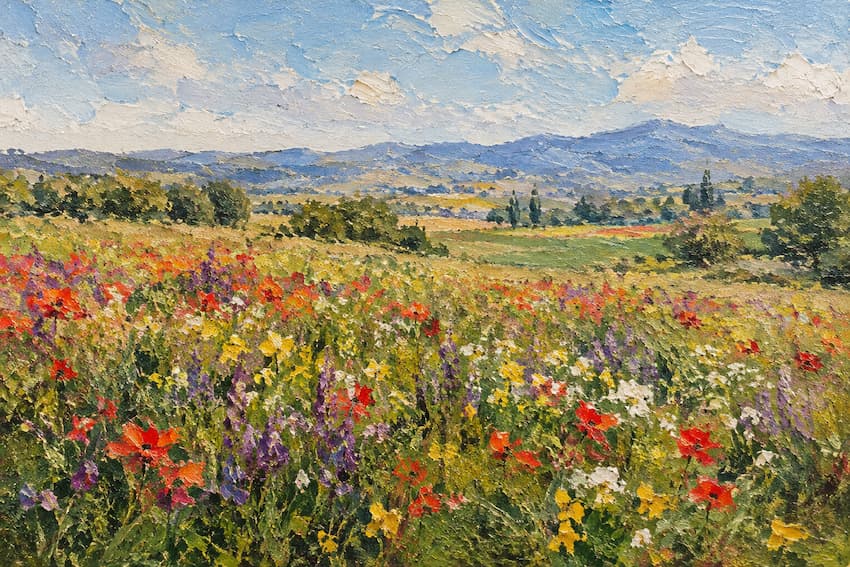
If you are thinking about buying a painting, there are several signs that can help you distinguish a hand-painted artwork from a print. Look for these details:
A well-executed oil painting can last for centuries, but it requires certain basic conditions. Avoid direct sunlight, radiators, and sudden changes in humidity, as the canvas expands and contracts in response to these conditions.
To clean the painting, simply remove dust with a soft, dry brush. Do not use water or cleaning products. If the artwork is varnished, any restoration work should be carried out by a professional, as some varnishes yellow over time and may need to be replaced.
A reproduction captures only the surface, while an original oil painting preserves traces of the entire creative process. The layers, paint thicknesses, and artistic decisions are all there, visible every time you look closely.
An original painting also develops character over time. Every artwork has its own story, and that story is never repeated in another piece.
If you want to bring a painting into your home, pay attention to the support, the technique, and the care it requires. With that knowledge, buying or gifting an oil painting on canvas becomes less of a gamble and more of an informed decision.