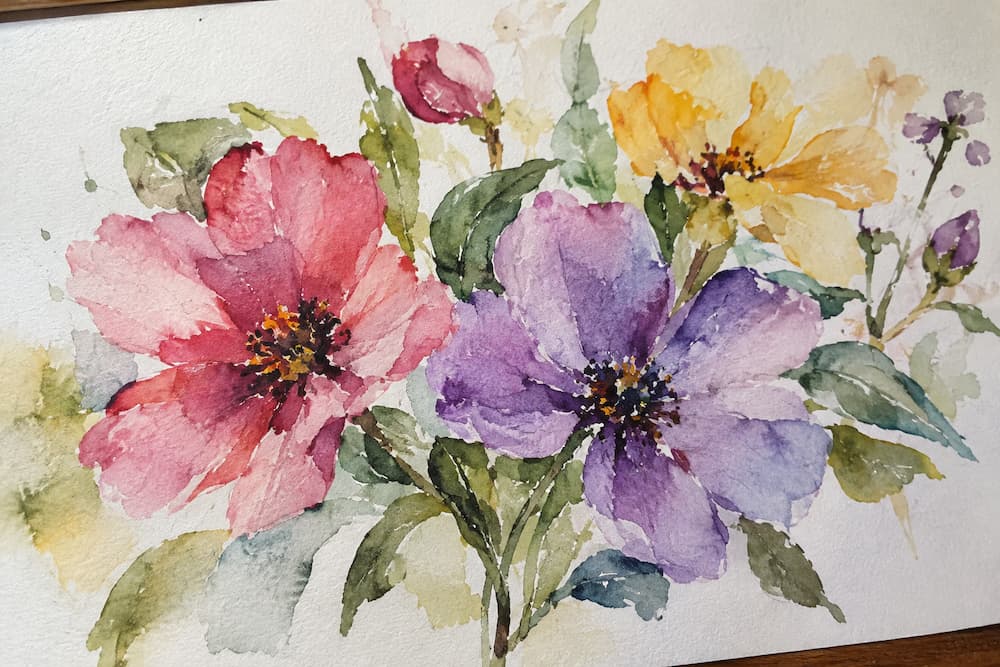
Do you have a wall that needs a splash of color or a gift you want someone to remember? Watercolor flower paintings work for both. Below, you’ll find specific ideas to help you decide which one is right for you or the person receiving it.
Watercolor is transparent, fluid and luminous. These three qualities naturally complement flower petals. A brush loaded with water allows colors to blend at the edges, making each flower look as though it has just bloomed. This effect is difficult to achieve with denser painting techniques.
That is why watercolor flower painting is one of the most beloved subjects in the medium. It can be delicate or bold, realistic or abstract, and it works equally well in a peaceful bedroom or a colorful living room.
The flower you choose determines the character of the painting. Here are some of the most rewarding flowers to paint on paper, grouped by color and the atmosphere they create.
White flower paintings bring light and a sense of calm to a space. Calla lilies, with their elongated shapes, are ideal for vertical formats; magnolias look beautiful in large paintings, while orchids add an elegant, serene touch.
The challenge of painting white in watercolor is that white is not actually painted on: it is achieved by leaving the paper untouched. The artist therefore shapes the petals with soft bluish or greenish gray shadows to create volume.
Wildflower paintings combine different sizes, shapes and shades, giving them a spontaneous character. Poppies, wild daisies and ears of wheat work well with a loose painting style, making them ideal for anyone who prefers a cheerful, less structured composition.
Hydrangeas and peonies form large clusters of petals that look beautiful in watercolor thanks to their color gradients. Blues, lilacs and pinks blend within the same flower, creating decorative paintings that are easy to coordinate with other elements.
Roses remain a classic choice for anyone looking for something romantic. In watercolor, they can be painted with realistic detail or with loose washes that suggest the flower without depicting every petal.
Yellow conveys energy and optimism, which is why paintings of sunflowers, mimosa and daisies work well in kitchens, entryways and workspaces. The contrast between yellow and green also makes them eye-catching, even in smaller formats.
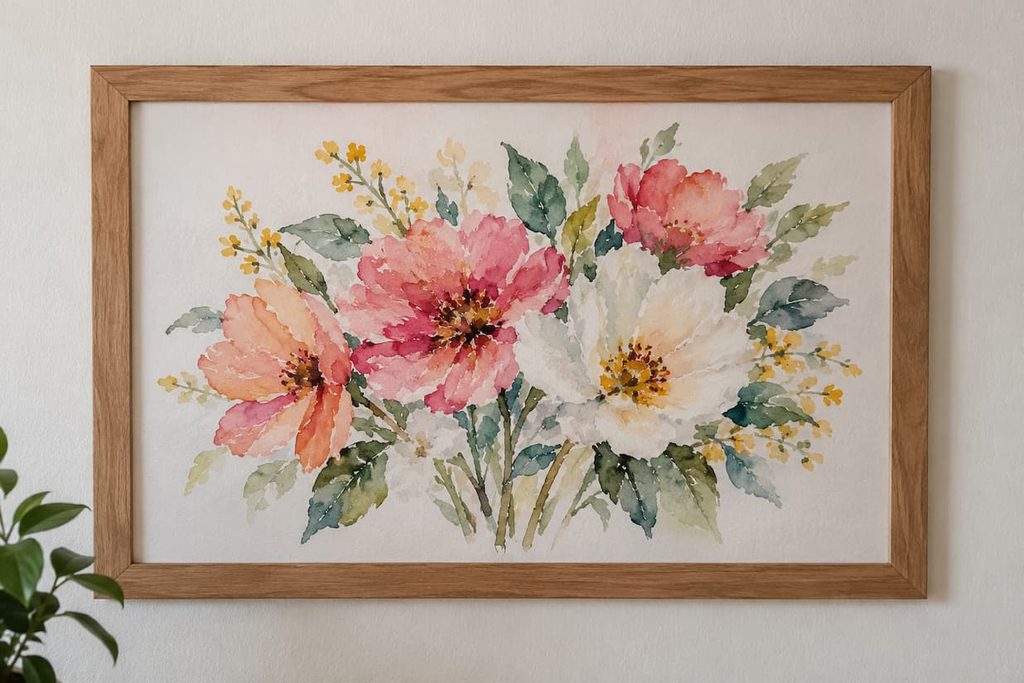
Two watercolor paintings of the same flower can look completely different depending on the artist’s style. It helps to know which approach best matches what you are looking for:
There is no single style that is better than the others. It all depends on the space and the taste of the person who will look at the painting every day.
When a painting is a gift, the meaning of flowers adds an extra layer of value. Interpretations vary across cultures, but some widely recognized associations can help you choose the right flower:
These associations are only a general guide. What matters most is that the recipient feels a connection with the flower, so it is worth considering their personal tastes before focusing on symbolism.
A watercolor flower painting is a personal gift that suits almost any occasion. Here are some moments when it is often a great choice:
A well-placed painting can change the feel of a room. To prevent the flowers from looking out of place, consider the colors, format and lighting of the space.
In a living room with neutral walls, a watercolor painting in intense colors can serve as a focal point. In a bedroom, soft shades such as lilac, pale pink and white help create a peaceful atmosphere.
If the room already features plenty of color, a watercolor painting with a more restrained palette that repeats one or two existing shades will work better. This allows the artwork to blend in without competing with the rest of the decor.
Vertical flower paintings can make narrow spaces feel more elongated, while a large painting can fill an entire wall on its own. You can also group several small watercolors featuring the same flower to create a series, using similar frames and mat boards to achieve a consistent look.
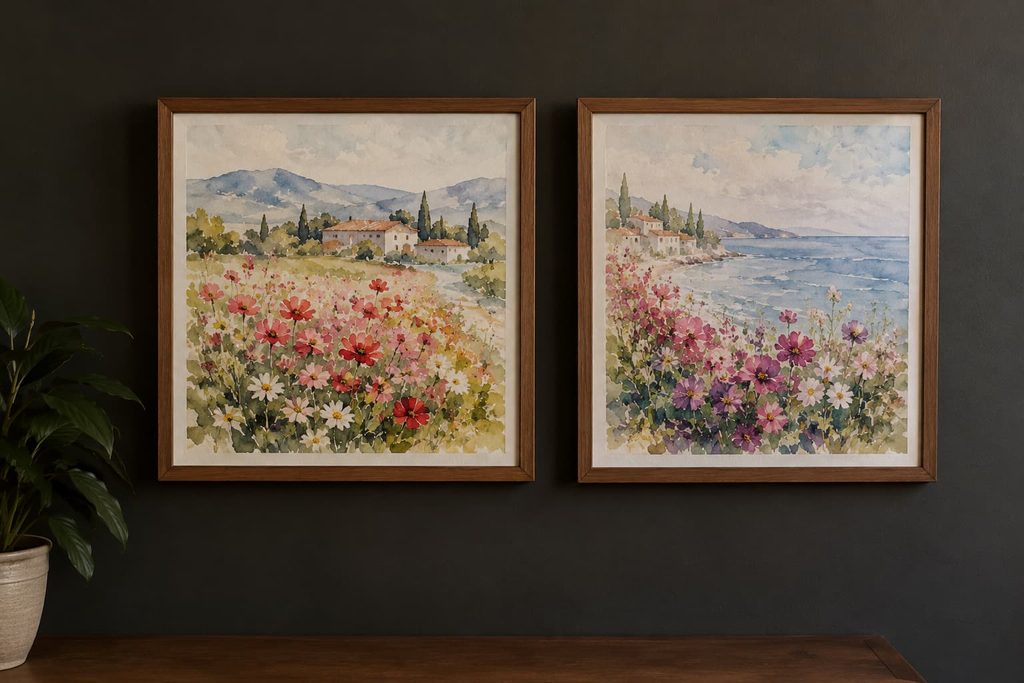
Painting flowers from life requires the artist to work quickly because petals change their position and color within just a few hours. This urgency often results in a fresher watercolor, with fewer forced details.
Photography, on the other hand, makes it possible to preserve an ephemeral flower. If you receive a bouquet you love or want to capture the flowers from a wedding, a good photograph taken in natural light can serve as the starting point for a personalized watercolor painting.
Using a reference photograph also makes it possible to paint flowers from another season or combine several varieties in a single composition.