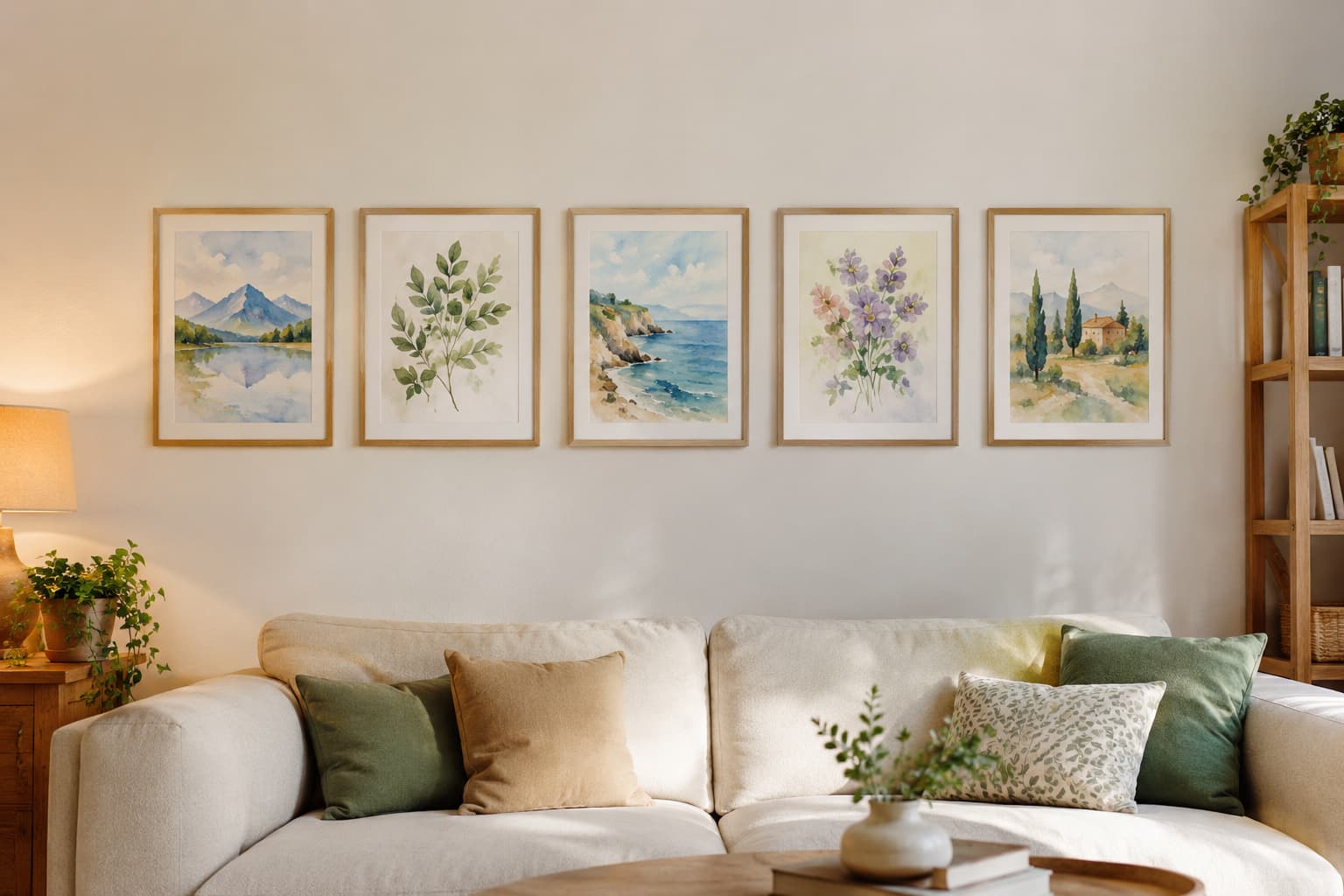
Do you have an empty wall that is crying out for a little color and personality? Here you’ll find realistic ideas for decorating walls with watercolors, whether you prefer to hang artwork or create the effect directly on the wall.
Watercolors work with almost any style because they bring light, transparency and movement to a space. Depending on the time and budget you have, you can choose one of these options or combine them:
Hanging paintings is the quickest and least risky solution because you can change your mind without altering the wall. It also allows you to refresh a room simply by moving or replacing a piece.
An original watercolor painting is painted by hand on paper, and this can be seen in the color transitions, texture and small irregularities in the pigment. It is a unique piece that adds value and personality to a space.
Printed art is more affordable and allows you to reproduce the same image in different formats. For a central piece in the living room or bedroom, it is worth investing in an original artwork, while a reproduction works well for hallways or secondary areas.
The most common mistake is choosing a piece that is too small: a small painting on a large wall can look lost. These guidelines can help you get the proportions right:
The frame and mat (the board with a window that surrounds the painting) separate the watercolor from the wall and give it room to breathe. A white or off-white mat usually works very well because it allows the transparent colors to stand out.
When it comes to the frame, light wood, a thin black frame or matte gold can work with different styles. The more delicate the painting, the more discreet the frame should be.
If you want to protect the artwork, choose glass or acrylic with a UV filter, which helps reduce the fading caused by light. It is a small expense compared with the value of the piece.
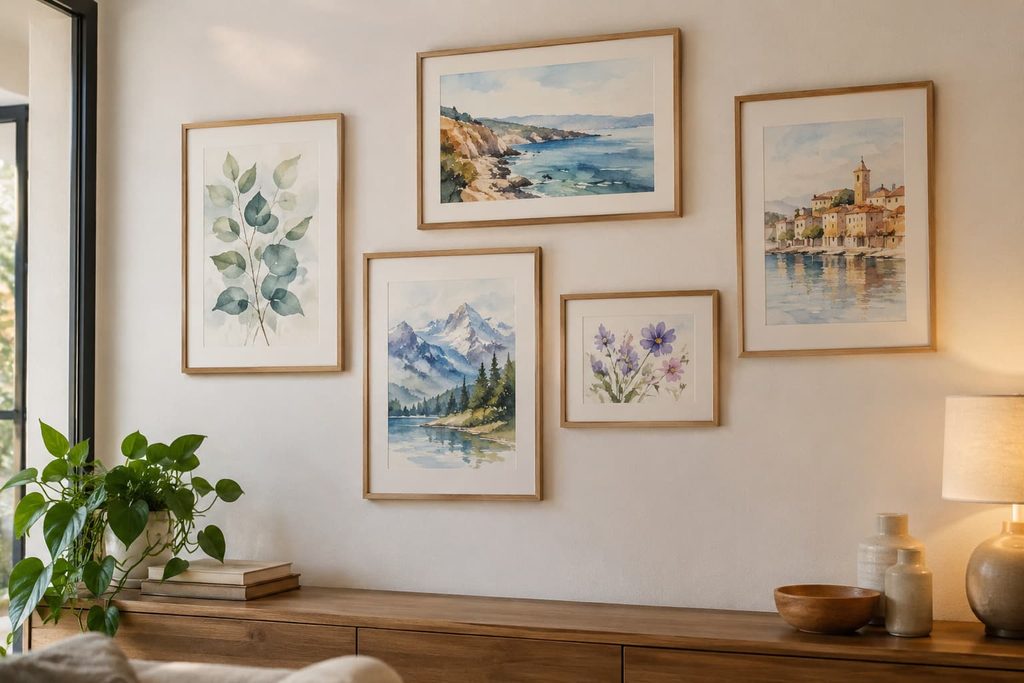
When a single watercolor is not enough to fill the wall, a composition of several pieces can multiply the effect. The key is to decide beforehand whether you are looking for an orderly arrangement or something more relaxed.
A grid arrangement, with frames of the same size and equal spacing, creates a sense of order and works particularly well in hallways and above headboards. To prevent it from looking too rigid, choose watercolors around the same theme, such as flowers, botanical subjects or landscapes, and vary the colors within the same palette.
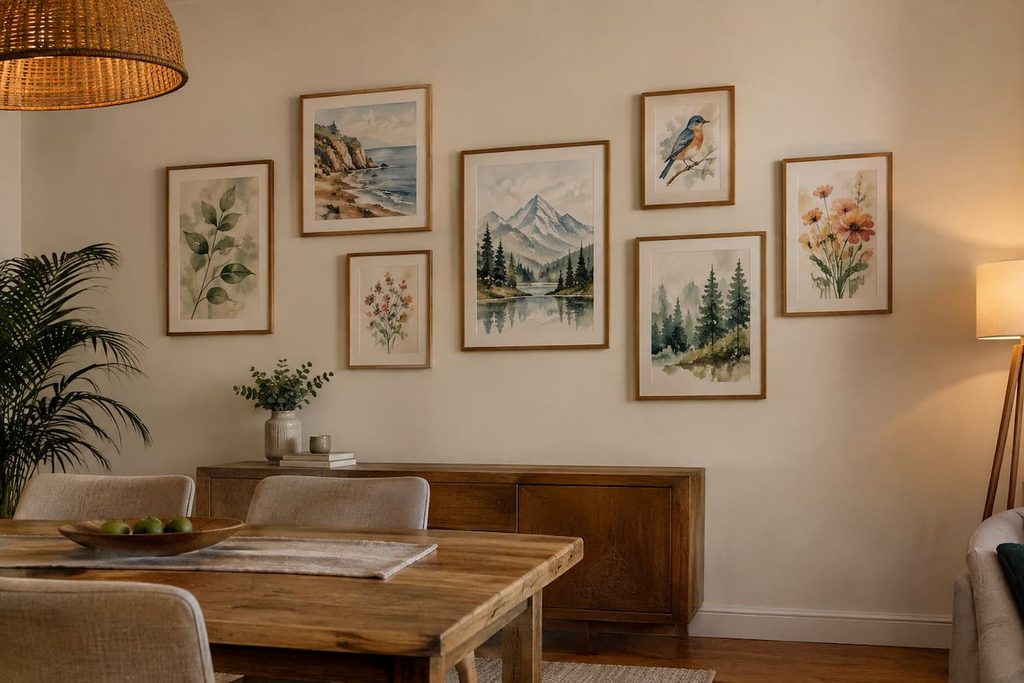
A gallery wall combines different sizes, formats and frames, giving you more room for creativity. It is a good idea to start with the largest piece, place it slightly off-center and build the rest of the arrangement around it.
Before making any holes, cut out paper templates using the dimensions of each frame and attach them to the wall with tape. This allows you to check the overall result and maintain a consistent 5–8 cm gap between pieces.
The best watercolor is the one that complements the purpose of each room. Thinking about how the space is used can make it much easier to choose a subject.
In the living room, landscapes, seascapes and large abstract compositions work well because they naturally become a focal point. In the dining room, still lifes and flowers add warmth without overwhelming the space.
In the bedroom, soft colors and peaceful scenes work well, such as skies, clouds, flowers or pastel landscapes. A watercolor above the headboard creates a calming focal point before bedtime.
If you prefer stronger colors, an abstract background with gradients can act as a visual headboard. In this case, avoid adding too many other pieces so they do not compete with one another.
In the kitchen, still lifes featuring fruit, herbs or flowers work well, provided they are kept away from stovetops and splashes. In a home office, choose subjects that inspire you, such as landscapes or botanical artwork. For an entryway, a medium-sized painting with a bright, light-filled subject can create a welcoming first impression without taking up too much space.
If you prefer to paint a watercolor effect on the wall, it is important to know that you do not use actual watercolor paint. Instead, use highly diluted water-based or acrylic wall paint. The result imitates the transparency and gradients of watercolor with a relatively simple technique, although it does require some practice.
You will need water-based paint in two or three shades, a natural sponge or wide brush, a spray bottle filled with water, painter’s tape and plastic sheeting to protect the floor. Test the colors on cardboard or in an inconspicuous area first to control how diluted the paint is.
The technique involves working on a damp wall, similar to the wet-on-wet technique used on paper. Follow these steps:
If painting an entire wall feels daunting, start with a small area, such as the space behind the headboard. You can also create the effect on a wooden panel or large canvas and hang it afterward like a painting.
Removable wallpaper reproduces the color washes, gradients and botanical motifs of watercolor without the need for painting. It is ideal if you live in a rental property because it can be removed without damaging the wall.
There are also adhesive vinyl designs and wall panels featuring watercolor images that are very easy to install. However, a printed finish does not have the depth of an original painting, so it works better as a background than as a focal piece.
Before choosing a piece, look at the colors already present in the room: furniture, textiles, flooring and walls. Watercolors in neutral, earthy or pastel tones blend into almost any space, while saturated colors work best as a focal point.
Avoid having several highly intense pieces competing for attention at the same time. A wall with one vibrant watercolor and the rest of the elements in calm tones will always look more elegant than one overloaded with saturated colors.
Watercolor is a delicate medium when exposed to direct sunlight, which can cause less-stable pigments to fade over the years. Hang the artwork away from windows with direct sunlight or protect it with UV-filtering glass.
Humidity is also an enemy of paper. Avoid poorly ventilated bathrooms or walls affected by condensation, which can encourage stains and mold, and opt for a high-quality acid-free mat.
Finally, use a hanging system appropriate for the weight of the frame and check from time to time that it is still straight. A soft duster is enough for cleaning, and avoid spraying glass cleaner directly onto the glass.
When choosing an artwork, let your first impression guide you: the watercolor that catches your eye is often the one you will enjoy living with for the longest time. Also consider the subject, format and colors that already dominate the room, and measure the wall before making your decision.
If you are looking for original watercolor paintings, you will find original artwork in different subjects and formats in this website’s store. It is a direct way to add the finishing touch to your wall.