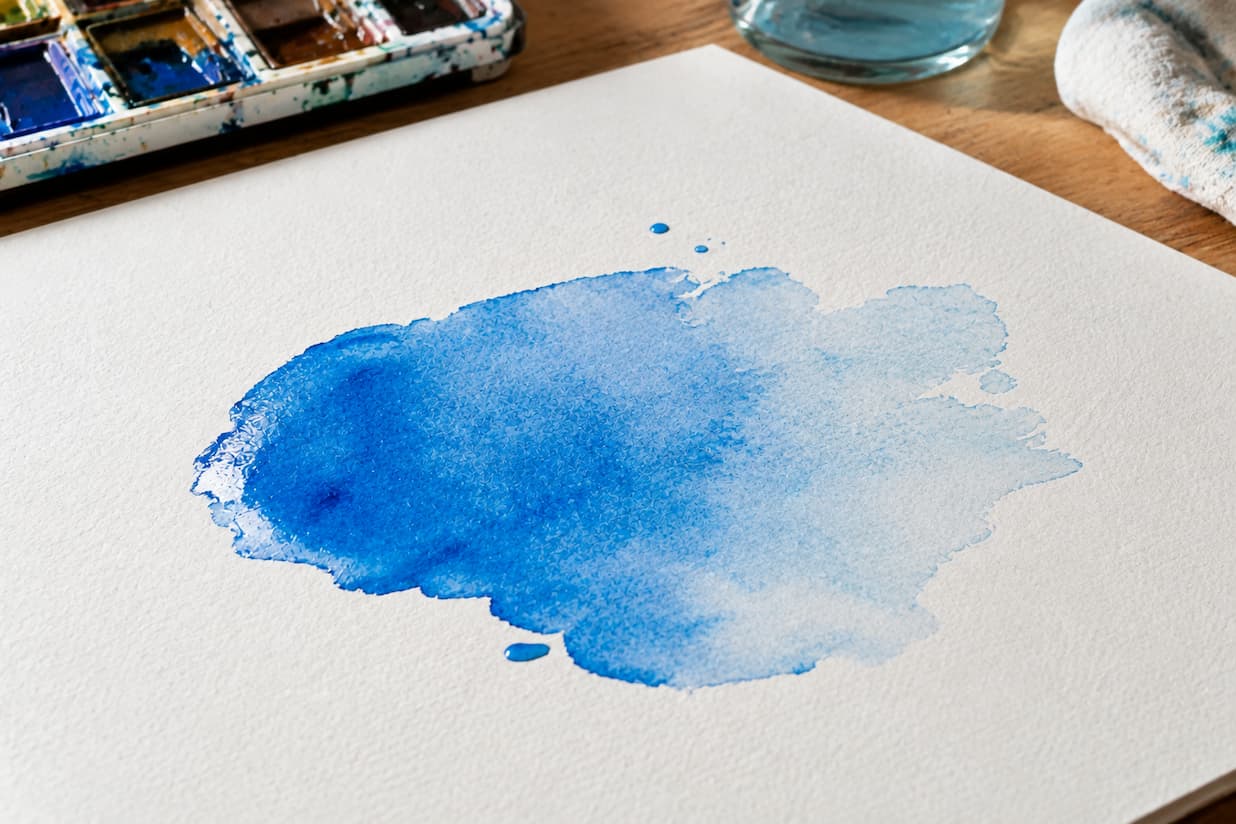
Water is the silent protagonist of every watercolor painting: the amount you use and how you manage it determine whether a wash remains luminous or turns into an uncontrolled blotch. In this article, we review the fundamentals of water control in watercolor painting, from brush loading to the most common mistakes, so you can apply them in your next painting session.
In watercolor painting, water is not simply a vehicle for pigment: it determines the transparency, intensity, and behavior of color on the paper. The more water you add to the mixture, the more translucent and luminous the result will be, while using very little water produces more saturated and opaque colors. That is why, before applying any brushstroke, it is worth considering the water-to-pigment ratio you need to achieve the effect you are looking for.
There is no single way to load a brush: the amount of water it holds determines whether the stroke will be fluid, controlled, or almost dry. Learning to recognize these three levels is one of the first steps toward mastering water control in watercolor painting.
When the brush is saturated with water, the paint flows easily and tends to spread across the paper, creating soft edges and atmospheric effects. This load is ideal for backgrounds, skies, or any area where you want a smooth gradient without visible brush marks.
A medium water load provides a balance between fluidity and precision, allowing you to work on recognizable shapes without completely losing the softness of the medium. This is the most commonly used load for everyday painting because it works well for both details and moderately sized areas.
With very little water, the brush deposits pigment unevenly, allowing the texture of the paper to show through the brushstroke. This technique, known as dry brushing, is particularly useful for representing rough textures such as tree bark, stone, or fur.
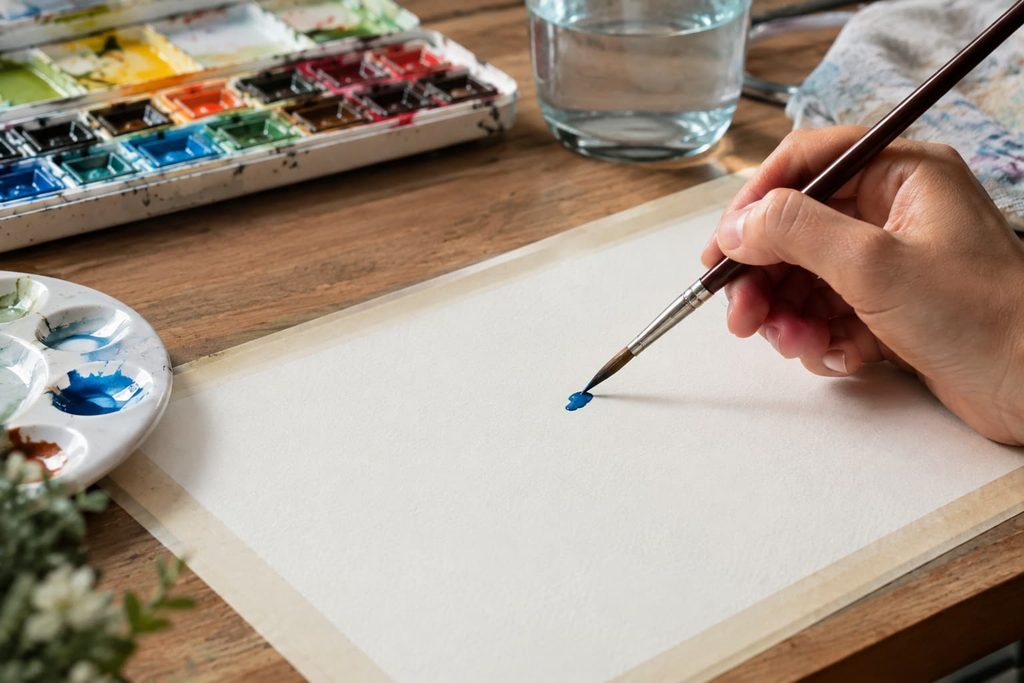
In addition to the amount of water on the brush, the final result depends on whether the paper is dry, wet, or partially dry when you paint. This variable is just as important as the amount of water in the brush, and the two work together to determine the final appearance of each brushstroke.
The wet-on-wet technique consists of applying paint to a sheet of paper that has previously been moistened with clean water. The pigment spreads spontaneously, creating soft edges and organic blends that are almost impossible to control completely.
This method is particularly popular for painting skies, soft backgrounds, or misty effects, although it requires practice to anticipate how the color will move across the paper.
With the wet-on-dry technique, a brush loaded with paint is applied directly to dry paper. The edges remain defined and the stroke is much more predictable, making this the preferred option when you need precision for shapes and details.
Even with experience, it is common to make mistakes related to water management that affect the final result of a painting. Recognizing these mistakes can help you correct them before they become habits.
Although technique depends largely on practice, choosing the right materials can make learning to control water much easier.
Paper weight is an important factor: below 300 gsm, paper tends to warp more easily when large amounts of water are applied. High-quality cotton paper absorbs water more evenly and allows you to work more freely without worrying about damaging the surface.
Natural-hair brushes, such as those made with Kolinsky sable, hold more water and release it gradually, making smooth transitions easier. Synthetic brushes, on the other hand, release water more quickly and are better suited to short, controlled strokes.
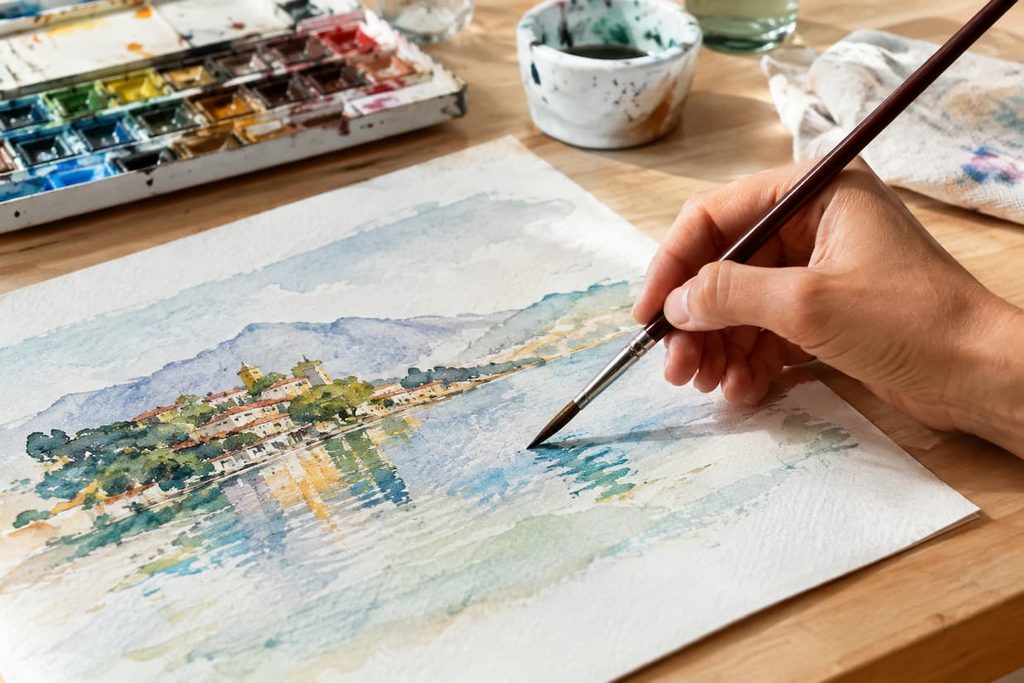
The best way to internalize these concepts is through repetition and by observing how water reacts on different types of paper. Spending a few minutes each day on simple exercises can accelerate your learning much more than painting complete works without a specific goal.
Knowing when to wait is just as important as knowing when to act: interfering too soon with a wet area can ruin an effect that was already working well. As a general reference, observe the sheen of the paper: while it still has a wet, reflective appearance, the color will continue to move, and only once that sheen disappears is it safer to continue working on the area.