If you’ve got brand-new watercolors sitting in a drawer and don’t know where to start, here are seven simple ideas to help you lose your fear of the brush. Each drawing is designed so you can practice a different technique, with no need to know how to draw well or have any prior experience.
To paint with watercolor you don’t need a studio full of expensive materials; the basics are enough to get you started. What matters most is choosing the right paper, because that largely determines whether the colors behave the way you expect.
With this you already have the essentials to get started; the rest—mixing wells, painter’s tape, salt, or alcohol—are extras you can add as you feel like experimenting with new effects.
Before drawing anything specific, it’s worth spending some time playing with loose blotches on the paper. This exercise teaches you to control the amount of water on the brush and to understand how the pigment reacts as you dilute it more or less.
Don’t aim for perfection: the idea is to start getting familiar with the transparency unique to watercolor, that ability to let the white of the paper show through the color. With five or six blotches of different sizes, you’ll already notice the difference between a light wash and a more heavily pigmented one.
A well-made gradient is one of the most useful easy watercolor drawings to practice, because it combines water control with patience.
Draw an elongated strip and add more and more water as you move toward the opposite end. The result should be a staircase of tones running from the most intense color to an almost imperceptible transparency.
Here the challenge is to mix two tones without them turning into a muddy color in the middle. Always work on the palette before applying the brush to the paper, so you have better control over the transition between both colors.
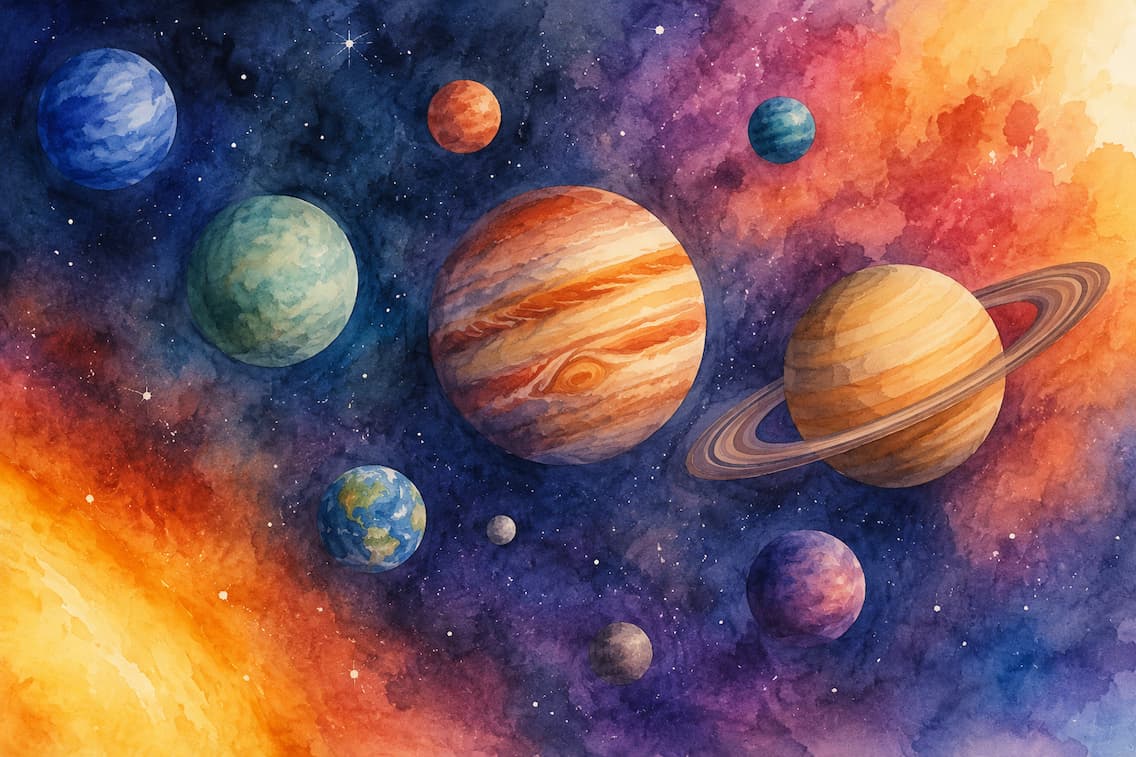
Planets are one of the easy drawings to paint with watercolor that people like most, because the result always surprises, even though the process is very simple. You only need to trace a circle with water and drop pigment inside it so it spreads naturally.
Once you feel comfortable, you can try different materials to vary the texture of each planet.
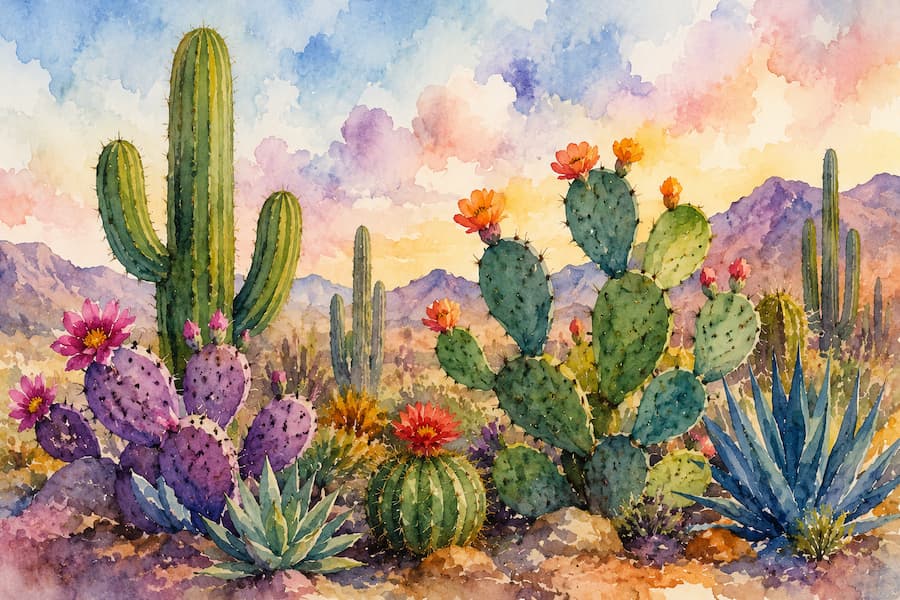
The wet-on-wet technique involves applying paint onto paper that’s still wet, letting the colors blend into each other with no sharp edges. It’s perfect for drawing simple cacti, since their rounded shape suits that spontaneous blending of greens well.
Start by wetting the silhouette with clean water and then add different shades of green, letting them blend on their own; once the paper has dried, finish off with the spines using a fine brush.
Choose a single color and work with different intensities to give the petals volume, letting each one dry before layering another coat. This exercise combines what you learned with transparency and gradients, making it a good middle step before moving on to more elaborate compositions.
Another very handy option is to sketch the flowers with a fine-tip marker or highlighter and then wet the lines with a damp brush. The ink dissolves and creates a watercolor-like effect very similar to traditional painting, but with more control over the final drawing.
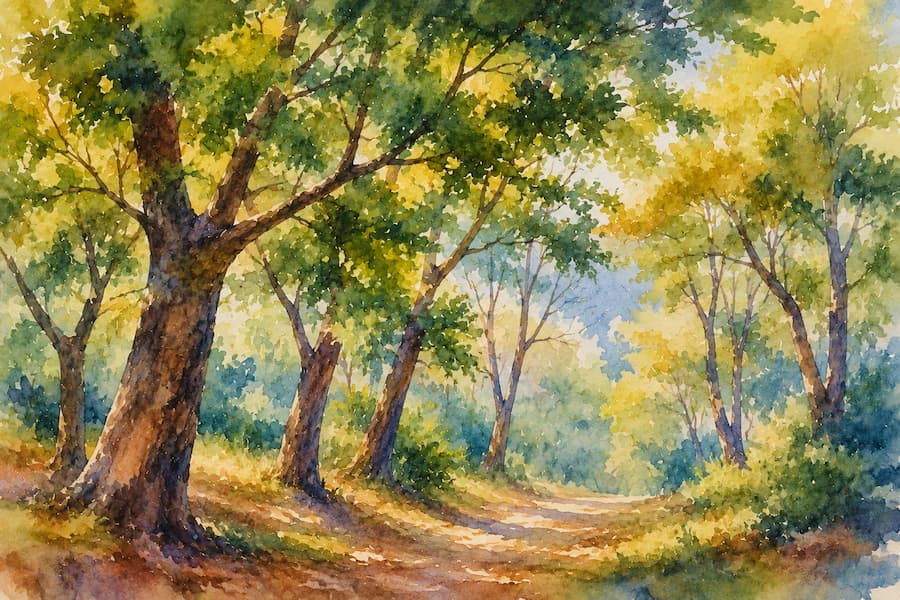
Trees are a good exercise because they bring together two different techniques: the trunk, which requires a firm, controlled stroke, and the canopy, where you can loosen up with freer blotches. Always start with the trunk using a fine brush and leave the canopy for last, once your paper hand has loosened up a bit.
Try painting the canopy with the wet-on-wet technique, dropping in different greens and a touch of ochre for variety. If you feel comfortable, you can add a small horizon behind it with a very diluted strip of color, like a miniature landscape.
This kind of simple composition is a good bridge toward somewhat more complex drawings, without being an abrupt jump from the previous exercises.
The galaxy is probably the most eye-catching of these easy watercolor drawings, and also one of the ones that allows the most freedom. Work on fairly heavyweight paper, since you’ll need plenty of water for the colors to blend well together.
Combine purples, blues, and a touch of magenta, letting them mix freely on the wet paper; then add salt or a few drops of alcohol in some areas to create texture. Once everything is dry, finish with small dots of white paint to simulate stars and give the composition its final touch.
Watercolor rewards patience more than pure technique, so don’t worry if your first results don’t look like the ones you see online.