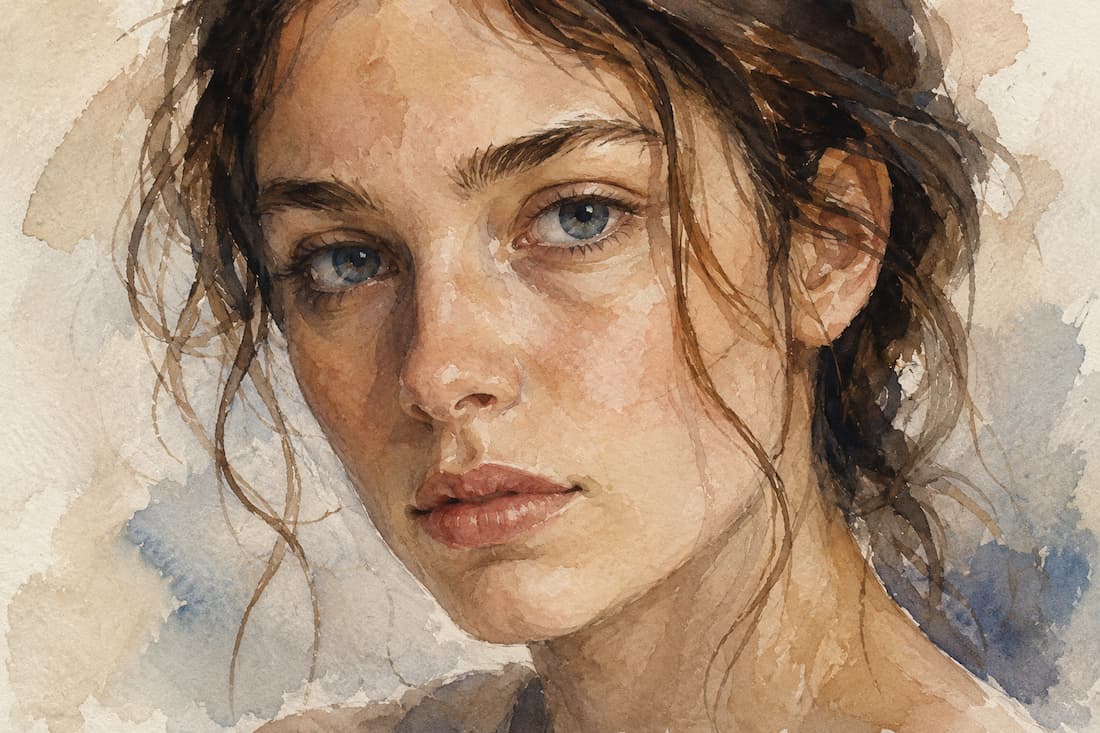
Painting a face with watercolor commands respect, because any excess of water or a poorly mixed skin tone shows immediately. In this article I’ll explain, step by step, how to paint portraits with watercolor: from the initial sketch to the final details of the hair and shadows.
Materials for painting a watercolor portrait
Before you sit down to paint you need to gather some specific materials, designed especially for portraiture, which will make working with skin tones much easier. A fine-grain watercolor paper is preferable to coarse-grain paper, because it allows greater control in small areas such as the eyes or lips.
- Fine-grain watercolor paper, at least 300 g/m²
- Small round brushes (sizes 4, 6, and 8) for facial details
- A range of earth tones burnt sienna, golden ochre, and burnt umber, plus blue and red for the shadows
How do you sketch a watercolor portrait?
The sketch is the foundation of every watercolor portrait, so give it the time it needs before touching the brush. You can draw it with a soft graphite pencil or a watercolor pencil, though in the latter case you should press lightly, because the lines will dissolve on contact with water and could darken the lighter skin tones.
Mark the basic proportions of the face — the position of the eyes, nose, and mouth — and also indicate, even very subtly, the shadow areas you’ll need later on. An overly detailed sketch isn’t necessary, because in watercolor much of the work is built with color rather than line.
How do you mix the skin tone for your portrait?
Mixing a good skin tone with watercolor is probably the step that takes the most practice, because there’s no single skin color: each person has different nuances depending on the light and complexion. As a starting point, combining burnt sienna with plenty of water usually produces a warm, realistic tone that works for most portraits.
Apply this first mix with a single, continuous brushstroke over the entire skin area, leaving reserved the areas where more light falls. Let it dry completely before adding the next layer, because working over wet paint at this stage can cause the tones to blend in an uncontrolled way.
Base colors for warm tones
For the illuminated areas of the face, combine yellow ochre with a very small amount of red, adding water until you achieve an almost transparent mix. This light tone serves as a general base and will be darkened with subsequent layers as you build the volume of the face.
How to darken the skin tone without losing transparency
To darken without making the color opaque, add burnt umber or umber oxide in small amounts, always over a previous layer that has already dried. Apply this mix only in the areas that really need more depth, such as around the nose, the eyelid crease, or the jawline.
Building the portrait in layers
Watercolor is worked from light to dark, and portraiture is no exception: each new layer should be darker and smaller than the last, concentrated only in the areas that need more contrast. This layered approach is what allows you to preserve the transparency typical of watercolor, instead of ending up with a flat, lifeless face.
Between layers, let the paint dry completely; if you’re in a hurry, you can use a hair dryer on a low setting to speed up the process without damaging the paper. Use these pauses to also step back from the painting and assess the whole, because a portrait looks very different up close than from a distance.
As you progress, add small touches of color to the cheeks, lips, and ears, always with plenty of water and little pigment, so the final result looks natural rather than made up. It’s in these final layers that the portrait begins to gain volume and personality.
Preserving whites and highlights on the face
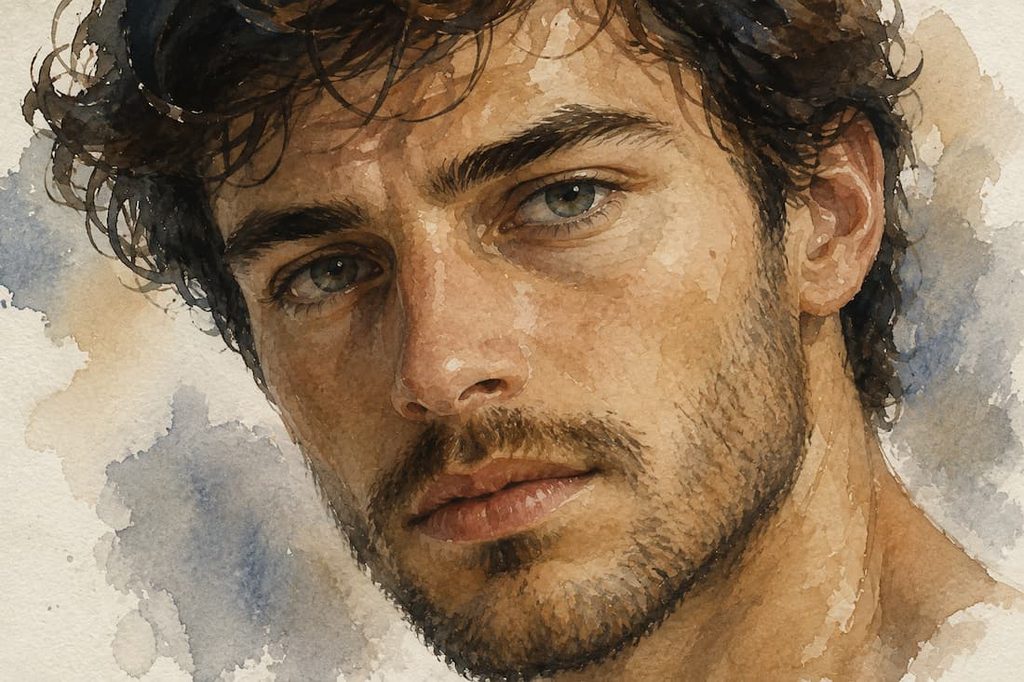
As with any watercolor, a portrait is not painted with white: the highlights are achieved by leaving the paper unpainted from the start, especially in areas such as the sparkle in the eyes, the tip of the nose, or the edge of the lips. Plan these white reserves already at the sketching stage, because it’s much harder to recover a lost white than to plan for it from the beginning.
- Reserve the sparkle in the eyes before painting the iris and the area around it
- Leave unpainted the points where light hits the skin directly, such as the nose or cheekbones
- Use masking fluid if you need to protect a small, very precise area
How do you paint hair with watercolor?
Hair is also painted in layers, starting with a general base tone that covers the whole mass of hair, applied with plenty of water so it comes out translucent. Once this first layer has dried, add loose strands with a fine brush, always following the natural direction of the hair so the result doesn’t look stiff.
Leave some highlights unpainted, especially if the hair is dark, because those touches of light are what give the whole thing volume and realism. In the deepest shadow areas you can apply one final, highly concentrated layer of pigment, almost without water, to unify the overall volume of the hair.
Common mistakes when painting watercolor portraits
The most common mistake when starting out is working with too much water in the first layers, which causes the colors to blend into each other and the face to lose definition. Another frequent error is not respecting drying times between layers, which ruins much of the white-reserve work you had planned.
- Not letting each layer dry properly before applying the next
- Using too much pigment from the start and losing the portrait’s transparency
- Forgetting to reserve the whites of the eyes and skin before starting to paint